Who is All-on-X for?
All-on-X is designed for patients whose teeth can no longer be saved, often because of years of extensive dental problems. Instead of replacing every missing tooth with an individual implant, we place multiple implants in the available jawbone to support a full arch of replacement teeth.
In our approach, we typically use six or more implants to support the restoration. The X in All-on-X refers to the number of implants used, which can vary depending on the patient's needs and available bone.
Why can All-on-X be completed in one visit?
Traditionally, after placing dental implants, we wait several months for the surrounding bone to heal and integrate with them before attaching the final restoration.
With All-on-X, we can sometimes place multiple implants across the arch and attach a fixed temporary set of teeth on the same day. This is possible when the implants achieve enough initial stability to support the provisional restoration.
For qualifying patients, extractions, implant placement, and temporary fixed teeth can all be completed during the same visit. The final restoration is typically placed after the implants have fully integrated with the bone.
Who is a candidate for All-on-X?
Many adults may be candidates for All-on-X, and age alone doesn't necessarily prevent someone from receiving treatment. What matters most is your overall health, the condition of your jawbone, and whether dental implants are appropriate for you.
Uncontrolled diabetes and smoking are important risk factors that we evaluate carefully because they can interfere with healing and increase the risk of implant complications.
We use a three-dimensional scan of your jaw to evaluate the available bone and plan implant placement. Some patients may need bone grafting or additional treatment before moving forward, depending on their individual anatomy.
How do you plan the All-on-X procedure?
The time you spend in the dental chair may be relatively short compared to the amount of planning that goes into the procedure.
We begin by taking physical or digital impressions and a CT scan to evaluate your jawbone and design your new teeth. We plan the prosthesis first so we know how the final restoration should look and function.
That design helps us create the provisional teeth you'll receive on the day of surgery or shortly afterward. We also use digital planning to fabricate a surgical guide that helps us position the implants according to the treatment plan.
For many patients, this process involves one to three planning visits before the surgical appointment.
What are the risks and benefits of All-on-X?
Like any surgical procedure, All-on-X carries certain risks. These can include infection, bleeding, damage to nearby structures, or an implant that doesn't successfully integrate with the surrounding bone.
If an implant fails, additional treatment may be necessary. In some cases, we may be able to replace the implant after allowing the area to heal.
One of the major benefits of All-on-X is that we can replace an entire arch of failing or missing teeth with a fixed restoration. This can improve chewing function, appearance, and overall quality of life.
Removing severely infected or non-restorable teeth can also help address existing oral disease. Research has identified associations between chronic periodontal inflammation and systemic conditions such as diabetes and cardiovascular disease, although these associations don't mean that replacing teeth directly prevents or cures those conditions.
How much does All-on-X cost?
The cost of All-on-X depends on several factors, including the number of implants, the complexity of the procedure, and the materials used for the restoration.
I often tell patients to think of it as an investment comparable to the price of a midsized car. It's a significant treatment, but for the right patient, it can address multiple dental problems through one comprehensive plan.
During your consultation, we'll review the estimated treatment costs and discuss available financing options so you understand what to expect before moving forward.
What is recovery and maintenance like after All-on-X?
Many patients begin feeling noticeably better within the first few days after surgery, although healing varies from person to person.
One of the most important parts of recovery is following a soft-food diet while the implants integrate with the surrounding bone. We typically recommend a soft diet for the first month or two, depending on your healing and treatment plan.
Dental implants are designed to provide long-term support, but the prosthetic teeth attached to them may eventually experience wear or damage. In many cases, the restoration can be repaired or replaced without removing the implants themselves.
Regular maintenance is essential. We'll monitor the implants, surrounding tissues, and your bite during follow-up visits. Depending on the type of restoration and your individual needs, professional maintenance may involve removing the prosthesis for a more thorough examination or cleaning when appropriate.
If you’re searching for quality dental care, we’re here to help. Call (305) 780-6089 or email [email protected] to schedule your visit. Our team is committed to keeping your smile healthy.
Full-Arch Restoration in Miami
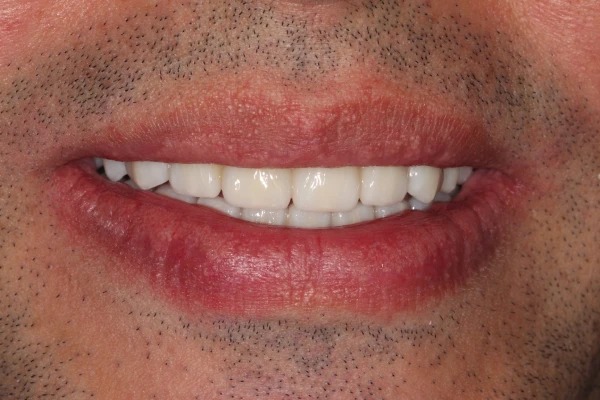 The All-on-X treatment at HQ Dontics is a dental solution for full-arch restoration, designed to provide patients with a complete set of prosthetic teeth anchored securely by six or more dental implants. This approach supports the placement of a hybrid prosthesis—a custom-made, durable restoration permanently attached to the implants. Combining the strength of a titanium framework with the natural aesthetics of dental materials, the hybrid prosthesis delivers a stable, functional, and lifelike set of teeth.
An option for patients who have lost most or all of their teeth, the All-on-X dental implants restores both the function and appearance of your smile while supporting overall oral health and quality of life. Contact HQ Dontics for this full-arch restoration solution.
Don't forget to follow us on social media: Facebook, Instagram.